Choose forex signals by checking whether you can understand the proposed trade, assess its downside, and examine a complete record rather than a profit promise. In 2026, your decision should separate the quality of the trade idea from the broker’s execution, trading costs, and the risk you accept.
- Choose forex signals you can evaluate; promised profits do not establish reliability.
- Tradeforex delivers its forex signals inside the Tradeforex web app, not through a broker app it owns.
- Check losing trades, timing, and execution assumptions before trusting a performance claim.
- Choose your forex trading app separately from your signals subscription.
How do you choose forex signals without relying on profit promises?
Use 5 checks: trade clarity, downside, evidence, execution, and suitability. Your goal is not to find the most persuasive forecast. It is to decide whether a trade idea gives you enough information to accept or reject it independently.
Start by separating the service that supplies an idea from the account that places an order. This guide to choosing a forex trading app before subscribing to signals explains that distinction.
1. Check whether the trade idea is understandable
Before acting, identify the currency pair, the proposed direction, and the condition for entering. Buying a currency pair means buying the first currency against the second; selling takes the opposite position.
An instruction to buy immediately differs from an instruction to buy only after a stated condition occurs. If the condition is unclear, you cannot reliably determine whether the idea still applies when you read it.
Look for explanations of these elements:
- Entry: What event or market level makes the trade actionable?
- Exit: What ends the trade, whether it succeeds or fails?
- Invalidation: What would show that the original reasoning no longer applies?
- Timing: When was the idea issued, and when does it stop being relevant?
These are evaluation criteria, not a claim that every provider supplies them. Do not fill gaps in a signal with assumptions just to make it tradable.
2. Check the downside before the potential gain
A signal’s proposed direction does not tell you how much money you could lose. Your position size, leverage, exit method, and actual execution all affect the outcome.
Leverage lets you control a position larger than the funds committed to it. It magnifies exposure in both directions, so a small currency movement can produce a substantial account-level loss.
A stop-loss is an instruction intended to limit a loss by closing a position. It is not a guarantee of execution at the requested level: fast markets and price gaps can produce a different fill.
Ask whether you understand the loss scenario before considering the favorable scenario. If you cannot explain what happens when the trade moves against you, the signal is not ready for your decision.
3. Examine the record behind the claim
A screenshot of a successful trade shows a selected outcome. It does not establish how a service performed across all its ideas, including losses, cancellations, and open positions.
In a 2026 evaluation, distinguish live-account results, demo-account results, and backtests. A backtest applies rules to historical data; it does not establish that someone placed those trades under live conditions.
Ask what the record includes, how timestamps were preserved, and whether trading costs appear in the results. Check whether unsuccessful ideas remain visible instead of disappearing from the history.
Win rate alone is insufficient. A record with frequent small gains can still lose money when occasional losses are larger. Drawdown—the decline from an account’s previous peak—adds context that a list of winning trades leaves out.
4. Check whether you can act under comparable conditions
A signal published at one moment is not the same as an order filled later. By the time you see the idea, the market price and the trade’s potential downside may have changed.
The spread is the difference between the quoted buying and selling prices. Slippage is the difference between the expected execution price and the actual fill. Both affect the result you receive.
Check whether the currency pair is available through your broker, whether you understand the order type, and whether you can monitor the trade as required. An idea that assumes attention you cannot provide is a poor fit, regardless of its explanation.
5. Check whether the service fits your decision process
You need to understand what you are subscribing to, where you receive ideas, and what remains your responsibility. Do not assume that a subscription includes trade execution, personal advice, or account management.
Read the current subscription terms and cancellation conditions before committing. Check how the provider explains limitations and handles questions about unclear instructions.
A suitable service supports a decision process you understand. It does not need to make the loudest claim about future results.
Why this matters
Signals turn someone else’s market view into something you can act on. That convenience does not transfer responsibility for your account to the person supplying the idea.
You are making 2 separate decisions: whether the trade idea makes sense and whether the position belongs in your account. A clear signal can still be unsuitable because of your exposure, experience, or ability to monitor it.
For a beginner choosing signals in 2026, the useful question is not simply whether the market prediction was correct. Ask whether the process made the downside understandable before the outcome was known.
How is a signals service different from a trading app?
A signals service supplies trade ideas; a broker’s trading app lets you manage orders and positions through that broker. A demo account provides a practice environment, not proof of live trading results.
| Option | Best for | Main benefit | Main limitation |
|---|---|---|---|
| Signals service | Reviewing externally supplied trade ideas | Gives you a proposal to assess | Does not remove market risk or establish execution quality |
| Broker trading app | Placing and managing orders | Connects your decisions to your trading account | An accessible interface does not make a trade suitable |
| Demo account | Practicing order handling and recordkeeping | Lets you rehearse without risking live funds | Simulated experience does not reproduce every live condition |
Choose these tools according to their roles rather than treating them as substitutes. A useful signal does not fix an unsuitable brokerage account, and an easy-to-use trading app does not validate a provider’s claims.
Why forex signals differ in usefulness
The usefulness of a signal depends on more than whether its predicted direction proves correct. Evaluate these factors together:
- Clarity: Ambiguous entry or exit instructions leave you to invent part of the trade.
- Timing: A delayed idea can present a different opportunity from the one originally described.
- Risk explanation: A directional forecast alone does not explain position sizing or potential loss.
- Record quality: Selected results reveal less than a consistent history containing unsuccessful ideas.
- Execution conditions: Spreads, slippage, and order handling affect the result in your account.
These factors explain why copying a reported result is not a reliable expectation. Your actual trade can differ even when you follow the same general direction.
How do you test a signal without treating practice as proof?
Use practice to check your understanding and workflow, not to certify future profitability. A successful rehearsal shows that you handled that example; it does not establish what the next trade will do.
Keep 3 records for each practice decision: the original idea, your execution, and your review. Preserve the original wording and timestamp before you know the outcome.
- Original idea: Record the proposed entry, exit, reasoning, and any stated expiry condition.
- Your execution: Record when you acted, what order you used, and whether you departed from the idea.
- Your review: Separate the market outcome from misunderstandings, delays, or order-handling mistakes.
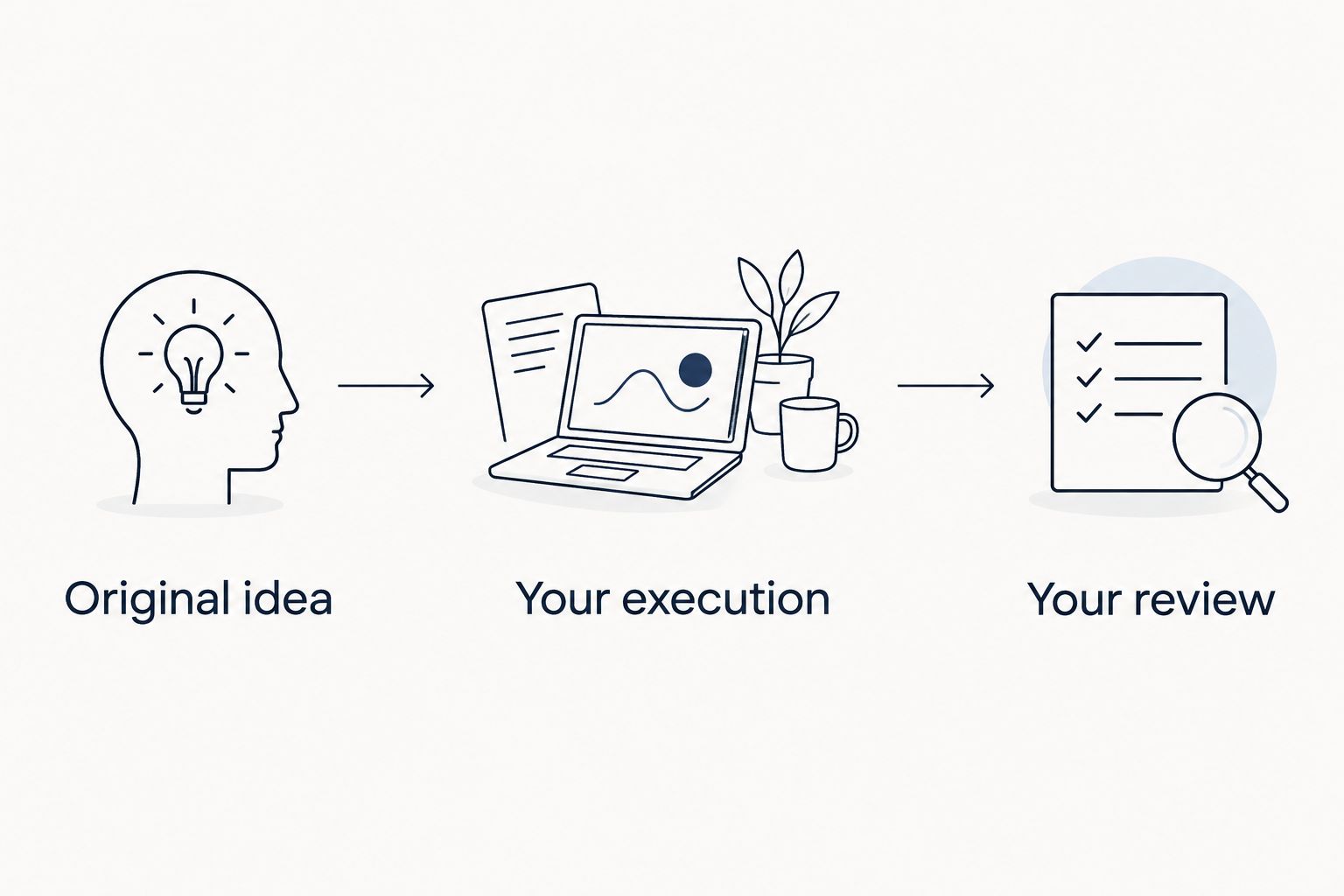
This record helps distinguish an unclear signal from an execution error. It also prevents hindsight from turning an incomplete instruction into something that appears obvious only after the market moves.
During a 2026 comparison, apply the same review method to each service. Changing your standards after seeing the outcome makes the comparison less useful.
Is a high win rate enough to choose forex signals?
A high win rate is not enough to choose forex signals because it excludes the size of gains and losses. It also says nothing by itself about drawdown, trading costs, or the completeness of the record.
Ask how the provider defines a win and handles partially closed, canceled, or still-open trades. Without consistent definitions, apparently similar figures can describe different things.
Should you reject a provider that promises guaranteed profits?
Reject guaranteed trading profits as a basis for choosing a provider. Currency trading involves loss risk, and confident language does not remove it.
Do not treat urgency, screenshots, or testimonials as substitutes for a clear explanation and an inspectable record. You can decline a subscription without proving that every promotional claim is false.
Should you choose your broker before your signals subscription?
Choose a suitable broker and understand its order controls before acting on forex signals. You need to know where trades are executed, which instruments you can access, and how to close a position.
For U.S. readers, check registration and disciplinary information through official regulatory resources, including the Commodity Futures Trading Commission and the National Futures Association. Registration does not guarantee trading results or endorse a signals provider.
Where Tradeforex fits in your evaluation
Tradeforex fits beginners who want to receive forex signals in a web app rather than expect the signals provider to execute trades. Subscribers receive Tradeforex signals inside the Tradeforex web app; that delivery method is separate from broker order execution.
If you are considering Tradeforex, apply the same checks to its current service information: understandable trade ideas, risk explanations, evidence, and subscription terms. Web-app delivery explains where you receive signals, not whether an individual trade will succeed.
Subscribe only after you understand the service and your remaining responsibilities. A subscription is access to trade ideas, not protection against trading losses.
Review the signals service
Check the current service information and subscription terms before deciding.
FAQ
What should a beginner look for in forex signals?
A beginner should look for understandable trade instructions, clear limitations, and evidence that includes unsuccessful ideas. Check whether you can explain the entry, exit, and downside before acting.
Can forex signals guarantee a profit?
Forex signals cannot guarantee a profit. Market movements, leverage, trading costs, and execution differences can produce losses even when an idea has a clear explanation.
Are forex signals the same as automatic trading?
Forex signals are not inherently automatic trading. Receiving a trade idea does not mean a system places an order; check the actual service arrangement rather than assuming execution is included.
How can I check a forex signals performance claim?
Check whether the claim comes from live trading, a demo account, or a backtest, and examine the complete record. Look for timestamps, losses, open trades, drawdown, and the treatment of trading costs.
Is a demo account enough to prove signals work?
A demo account is not enough to prove that signals will produce live profits. It helps you practice interpretation and order handling, but simulated conditions and behavior differ from live trading.
Can I receive a good signal and still lose money?
You can receive a clearly explained signal and still lose money. The market can move against the idea, and your timing, position size, or execution can differ from the provider’s assumptions.
One last thing
Before subscribing in 2026, write down what would make you stop following a signal or stop using the service. Set that standard before a persuasive success story changes your expectations.
Judge the decision using information available before the trade, not just the outcome afterward. A winning trade does not repair an unclear process, and a losing trade does not automatically prove that a clearly explained idea was dishonest.