Forex signals for night shift workers are currency-trading ideas you review around overnight work, with the aim of making trading decisions without interrupting your job or sleep. Choose signals that fit your actual review windows; being awake at night does not make you available to manage a trade.
- Choose forex signals for night shift workers around protected review windows, not the number of trade ideas delivered.
- Tradeforex delivers subscribers’ forex signals inside its web app; a signal is not an executed broker order.
- Compare forex trading apps on order controls, account security, and your ability to manage positions during work.
- Skip stale or unclear signals rather than chasing an entry after a missed break.
Why forex signals matter for night-shift workers
Night-shift work creates a specific mismatch: a trade idea can arrive while you are awake but unable to act. A hospital round, delivery route, production task, or protected rest period takes priority over a market alert.
Start with how to choose a forex trading app before subscribing to signals. Your broker app must support the orders and account checks you need; a separate signals subscription does not replace those controls.
For your 2026 shortlist, separate market access from personal availability. Forex trading generally runs through the working week across global sessions, but your broker’s instrument hours and maintenance periods still matter. An open market is not a reason to trade when you cannot review the decision.
The right signal is one you can evaluate and manage, not simply one you receive. Missing an opportunity leaves your account unchanged; entering without understanding the risk creates an obligation you must manage.
How to build a shift-compatible signals routine
Map your review windows before choosing signals
Write your work, commute, and sleep periods into a calendar first. Then mark when you can genuinely assess a trade without rushing or breaking workplace rules. Do not treat every scheduled break as guaranteed trading time.
Use 2 planned review windows as a starting routine: one before work and one after waking, adjusted to your schedule. This is a planning recommendation, not a target for trading frequency. A review can end with no trade.
If your roster rotates, rebuild the calendar for each shift pattern. A routine that works on a fixed overnight schedule does not automatically work during a week of changing start times.
- Mark work duties and commuting as unavailable periods.
- Protect sleep rather than scheduling market checks inside it.
- Record review windows in your local time zone.
- Add the time zone used by the signals provider.
- Decide what happens when a planned review is missed.
Match the trade horizon to your longest absence
A trade horizon is the period a trading idea expects to remain relevant. Short-lived ideas demand a different routine from positions intended to remain open longer. Neither is automatically safer.
Start manually by reading sample ideas and noting when an entry becomes invalid. Ask whether the idea requires immediate action, repeated adjustments, or a later review. Reject a workflow that assumes you can watch prices throughout a shift.
Longer-horizon trading reduces the need for instant decisions only when the actual strategy permits it. Positions held across days still face changing prices, financing charges, and economic announcements. Your 2026 comparison should assess those obligations alongside convenience.
- Identify the intended holding period where it is stated.
- Check whether entry instructions expire or require reassessment.
- List any expected changes to stops or targets.
- Compare required monitoring with your longest unavailable period.
- Reject instructions that depend on attention you cannot provide.
Separate signal delivery from broker execution
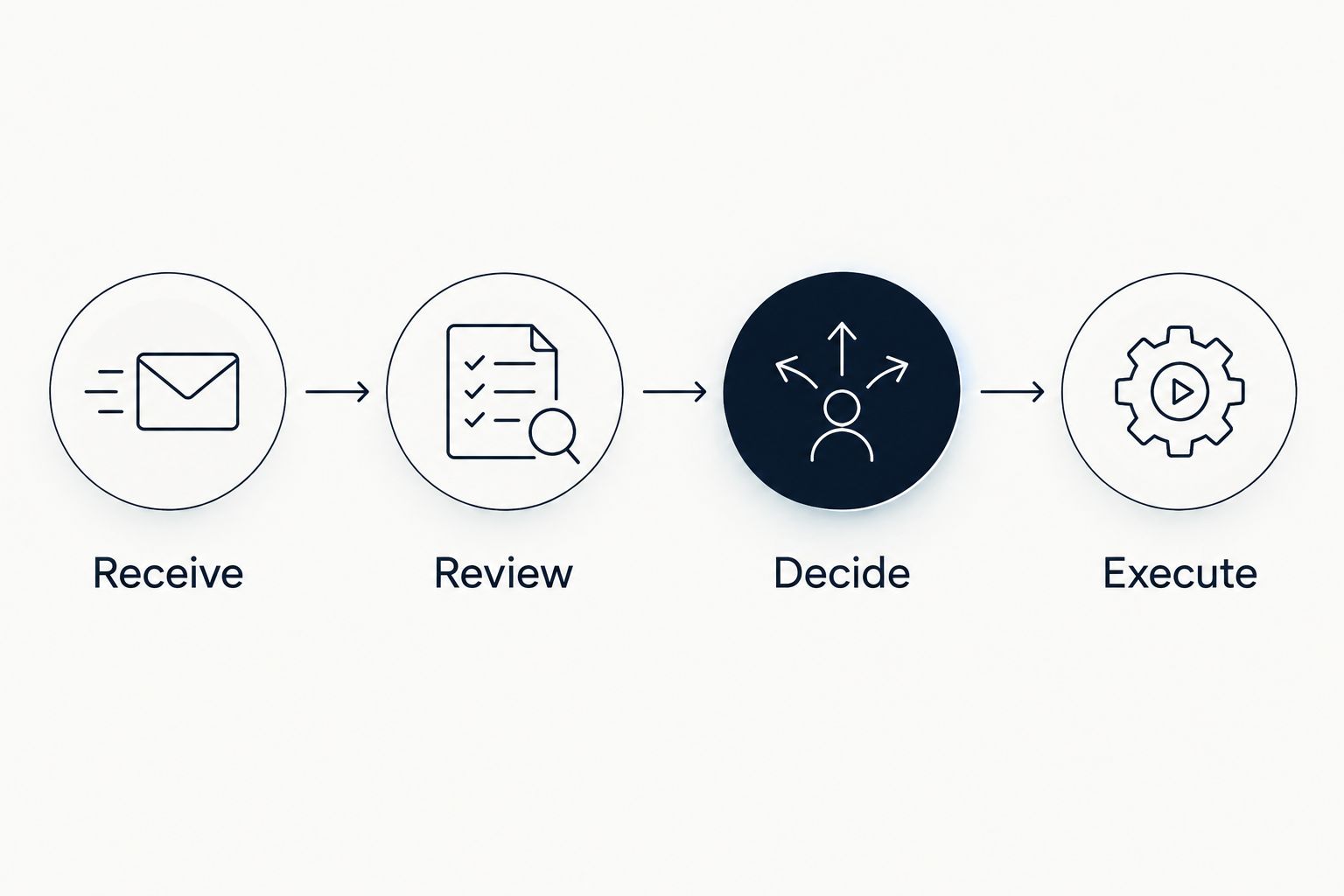
Before subscribing, sketch the process on paper: where the idea arrives, where you assess it, and where you place an order. This prevents a common beginner mistake—assuming that receiving a signal opens or manages a trade.
Tradeforex provides its own forex signals service, and subscribers receive signals inside the Tradeforex web app. That establishes the delivery location; it does not establish broker execution, notification methods, or the content of every signal. Check those details before building a routine around them.
Tradeforex forex signals are best for readers seeking signal delivery inside its web app rather than a broker trading app. That is a delivery fit, not a performance verdict. You still need to evaluate each idea and understand the broker account used for trading.
- Identify the signal-delivery location.
- Keep broker account access separate from subscription access.
- Verify how you learn that a new idea is ready.
- Check whether your workplace permits access during breaks.
- Confirm the process for reviewing updates or cancellations.
The workflow has separate decisions: receiving an idea does not establish that it is suitable, current, or executable at the quoted level. Keep those checks distinct when interruptions are likely.
Read the entry, exit, and risk instructions
Use a written checklist before opening the broker app. An entry describes where or under what condition a trade begins. An exit describes how it ends; a stop-loss is an instruction intended to close a position when the market moves against it.
Look for 3 decision fields: entry, exit, and risk. These are evaluation criteria, not a claim that every provider supplies them. If an idea leaves a field unclear, do not fill the gap with a guess made during a short break.
A stop-loss does not guarantee the exact exit price. Fast price changes and gaps can produce a different execution price. Position size—the amount you trade—also affects the money at risk, so a provider’s suggested trade is not a personalized account decision.
- Confirm the currency pair and buy-or-sell direction.
- Identify the entry condition and any invalidation rule.
- Understand the proposed exit and stop instructions.
- Calculate account exposure using your intended position size.
- Check for scheduled announcements affecting the currencies.
- Skip ideas whose essential instructions remain unclear.
Rehearse missed alerts and interruptions
Before using live money, practice with a written log or a broker demo account where one is offered. The purpose is to test your routine, not to turn simulated results into a profit forecast. Demo execution does not establish what a live account will deliver.
Run 3 interruption checks: an idea received while asleep, a missed break, and a trade-management task interrupted by work. Record what you would do in each case. A process that only works when you respond immediately is a poor match for an unpredictable shift.
Also check order status deliberately. An accepted pending order, an open position, and a rejected order are different states. Do not assume an interrupted app session completed the action you intended.
- Record when an idea appeared and when you reviewed it.
- Note whether the original entry remained relevant.
- Practice checking accepted, rejected, and pending orders.
- Test how you find existing stop instructions.
- Write a default response for missed review windows.
- Keep simulated observations separate from live results.
Review the service before subscribing
Use the routine you have tested to assess a subscription, rather than changing your working life to accommodate a provider. For a 2026 decision, ask for current information about signal delivery, recordkeeping, and subscription terms. Do not treat an old screenshot as evidence of the present service.
Assess a performance record beyond its headline win rate. Winning-trade frequency alone leaves out the size of losses, trading costs, and open positions. Screenshots of selected wins do not establish the result of following every signal.
For Tradeforex forex signals, subscription fit starts with whether you want to receive ideas inside the web app. Subscribe only after checking that the actual service and its current terms suit your schedule. A signals subscription is not a substitute for understanding the trade.
- Examine how winning and losing ideas are recorded.
- Check whether open trades and changes remain visible.
- Read renewal and cancellation terms before committing.
- Confirm whether the delivery process suits your review windows.
- Reject profit guarantees and pressure to act immediately.
Review Tradeforex before subscribing
Check whether receiving forex signals inside the web app fits your shift routine.
Compare your options for overnight work
Choose the workflow first, then assess a provider or app against it. This 2026 comparison describes the trade-offs between approaches, not verified features of any unnamed service. No approach removes currency-market risk.
| Option | Best for | Practical advantage | Key limitation |
|---|---|---|---|
| Manual analysis and a written journal | Beginners learning before subscribing | You control the review schedule and document your reasoning | You must develop and apply your own analysis |
| Signals reviewed in planned windows | Workers with dependable review periods | Trade ideas give you something specific to assess | An idea can become outdated before your review |
| Longer-horizon trade ideas | Workers unable to monitor frequent changes | The intended holding period can fit wider review intervals | Longer holding periods still carry market and financing risks |
| Immediate-response signals | Workers genuinely able to assess and act promptly | The workflow focuses on current entry conditions | It conflicts with unpredictable duties and protected sleep |
| Demo-only practice | Beginners whose schedule remains untested | You can rehearse decisions without placing live-money trades | Simulated conditions do not prove live execution or results |
Use demo-only practice when you cannot yet explain what happens during your longest absence. A slower decision process is preferable to a subscription you cannot use responsibly.
Common mistakes night-shift workers make
Treating overnight hours as spare time
Being awake is not the same as being free. If your job requires sustained attention, a signal that needs an immediate response is a scheduling conflict, not an opportunity you must capture. Exclude trading from driving and safety-critical duties.
Chasing an entry after waking
A signal describes an idea under particular conditions. When you wake later, the market price and the trade’s logic can differ. Reassess the current conditions; do not place an order solely because the original message looked attractive.
Replacing sleep with trade monitoring
Do not build a 2026 trading routine around waking repeatedly to inspect positions. Choose an approach compatible with protected sleep, or keep practicing without live exposure. An alarm does not make a demanding strategy compatible with your life.
Copying a position size without checking exposure
Another trader’s position size says nothing about what your account can absorb. Calculate your own exposure and consider existing positions, including trades involving the same currency. Separate signals can create overlapping exposure rather than independent risks.
FAQ
What are the best forex signals for night shift workers?
The best fit is a signal workflow you can review and manage without interrupting work or sleep. Check the intended holding period, entry validity, and required follow-up before comparing providers.
Can I follow forex signals if I sleep during the day?
Yes, but only when the workflow accommodates the periods when you cannot review or manage trades. Receiving an idea while asleep does not mean it remains suitable when you wake.
Does Tradeforex execute trades for subscribers?
Do not treat Tradeforex as a broker trading app or assume a subscription executes trades. Subscribers receive its forex signals inside the web app; signal delivery and broker order execution are separate functions.
Are swing-trading signals better for overnight workers?
Longer-horizon signals fit a shift schedule only when their actual monitoring requirements match your availability. Holding a position longer does not eliminate losses, financing charges, or the need to manage risk.
Should I enter a trade after missing the original signal?
Do not enter solely because you missed the original signal. Check the current price, the entry conditions, and whether the idea remains valid; skip the trade when that is unclear.
Can a stop-loss protect a trade while I am working?
A stop-loss helps define an exit instruction, but it does not guarantee an exact execution price or eliminate losses. Confirm the order is accepted and understand your broker’s rules before relying on it during an absence.
Should I subscribe before testing my shift routine?
Test your routine before subscribing. A written rehearsal or demo account can reveal whether missed breaks, sleep periods, and order-management tasks make the proposed workflow unsuitable.
One last thing
Before choosing signals in 2026, write a missed-signal rule beside your work schedule: If I cannot verify the current entry and risk, I do not trade. That rule gives a missed break a defined outcome instead of turning it into a rushed decision.